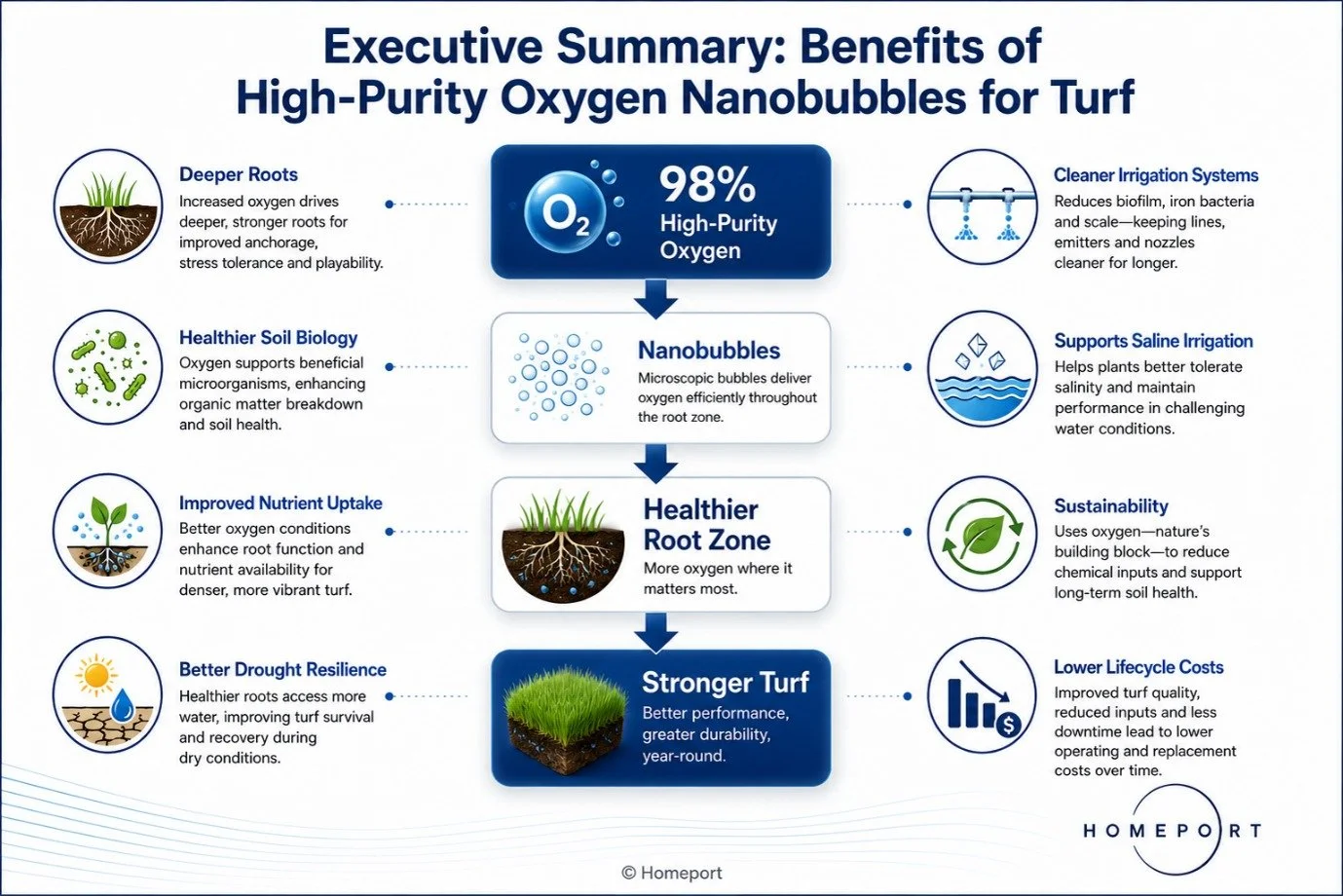

Nanobubbles for Turf Management
Healthier Roots, Stronger Turf and Smarter Irrigation
Every golfer notices the putting surface.
Every footballer notices the pitch.
Every groundskeeper notices the colour of the turf.
But the health of every sports surface is determined by something very few people ever see.
The root zone.
Healthy turf is built from the soil upwards.
No amount of fertiliser, irrigation or mowing can compensate for roots growing in an oxygen-deficient environment.
Whether managing a championship golf course, a Premier League football pitch, a cricket oval or a municipal sports field, the objective is always the same:
Strong roots
Healthy soil biology
Efficient water use
Uniform turf growth
Consistent playing quality
Everything begins below the surface.
The Hidden World Beneath the Turf
A healthy turf profile is far more than sand or soil supporting grass.
It is a living biological system where plant roots, beneficial microorganisms, water, nutrients and oxygen constantly interact.
Roots require oxygen just as leaves require sunlight.
Beneficial bacteria require oxygen to recycle nutrients.
Organic matter decomposes more efficiently in well-oxygenated soils.
Without adequate oxygen, the entire root-zone ecosystem begins to decline.
The visible symptoms often appear gradually:
Reduced turf density
Slower recovery after play
Poor root development
Increased disease pressure
Localized dry spots
Weak color
Reduced drought tolerance
Many of these problems originate not at the surface—but below it.
Why Oxygen Matters to Turf
Grass roots continuously respire.
During respiration they consume oxygen and release carbon dioxide.
If oxygen availability becomes limited, root metabolism slows.
Water uptake decreases.
Nutrient absorption becomes less efficient.
Root growth declines.
Over time, turf becomes increasingly vulnerable to heat, wear, disease and environmental stress.
This is particularly important on intensively managed golf greens and sports pitches where root systems are expected to perform under constant pressure.
Engineering Insight
Turf managers often focus on what they apply to the grass.
Nanobubble technology focuses on improving the environment around the roots.
Modern Turf Faces Modern Challenges
Maintaining world-class turf has become significantly more demanding.
Today's turf managers must produce exceptional playing surfaces while using:
Less water
Less fertiliser
Fewer chemicals
Lower energy
Smaller maintenance budgets
At the same time, expectations continue to increase.
Golfers expect perfect greens.
Football clubs expect year-round playability.
Municipalities demand greater sustainability.
Climate change adds further pressure through:
Higher temperatures
Longer droughts
More intense rainfall
Increasing salinity
Greater irrigation restrictions
Traditional turf management practices remain essential—but many facilities are now looking for technologies that improve the efficiency of the entire irrigation system rather than simply increasing water use.
The Middle East Presents Unique Challenges
Few regions illustrate these challenges better than the Middle East.
Many golf courses, football fields and landscaped developments are constructed using engineered sand profiles or naturally sandy soils.
These provide excellent drainage but introduce several agronomic challenges.
Sandy soils typically:
Drain rapidly
Hold less water
Retain fewer nutrients
Contain lower organic matter
Support lower microbial populations
Dry out more quickly during summer
In addition, many facilities irrigate using:
Treated sewage effluent (TSE)
Reclaimed water
Brackish groundwater
High-salinity water sources
These conditions place additional stress on turf and the root zone.
Nanobubble technology cannot change the soil type—but it can improve how irrigation water interacts with that soil.
By delivering oxygen-rich water directly into the root zone, nanobubbles help create conditions that support healthier microbial activity, stronger root growth and more efficient nutrient utilisation.
For Middle Eastern turf managers, this can be especially valuable where extreme temperatures and marginal irrigation water make maintaining high-quality playing surfaces increasingly difficult.
Irrigation Water Is More Than Just Water
Most irrigation systems are designed to deliver the correct volume of water.
Far fewer consider the quality of that water.
Water carries far more than moisture.
It transports:
Dissolved oxygen
Nutrients
Microorganisms
Minerals
Organic compounds
Salts
Improving irrigation water therefore improves far more than irrigation itself.
It influences the biological health of the entire root zone.
This is where nanobubble technology begins to differ from conventional irrigation.
Instead of simply moving water from the pump to the sprinkler, nanobubbles actively improve the water before it reaches the soil.
Why Homeport OxyFusion® Takes a Different Approach
Many nanobubble systems operate using ambient air.
Homeport chose a different engineering philosophy.
Every Homeport OxyFusion® system is engineered with an integrated oxygen concentrator, producing approximately 98% high-purity oxygen on site.
We believe this provides the optimum balance of oxygen transfer efficiency, operational reliability and long-term performance for demanding oxygenation applications.
Rather than relying on the 21% oxygen available in ambient air, OxyFusion® delivers irrigation water enriched with high-purity oxygen nanobubbles, maximising the amount of dissolved oxygen reaching the root zone.
The result is not simply better oxygen transfer—it is a more consistent and effective oxygenation strategy designed for long-term turf health.
Looking Beyond Greener Grass
The real objective is not simply greener turf.
It is creating a healthier underground ecosystem that supports stronger plants naturally.
That means focusing on:
Healthier roots
Better soil biology
Improved nutrient efficiency
Reduced plant stress
Greater resilience during heat and drought
More sustainable irrigation practices
Lower long-term maintenance costs
Healthy turf is simply the visible result of a healthy root zone.
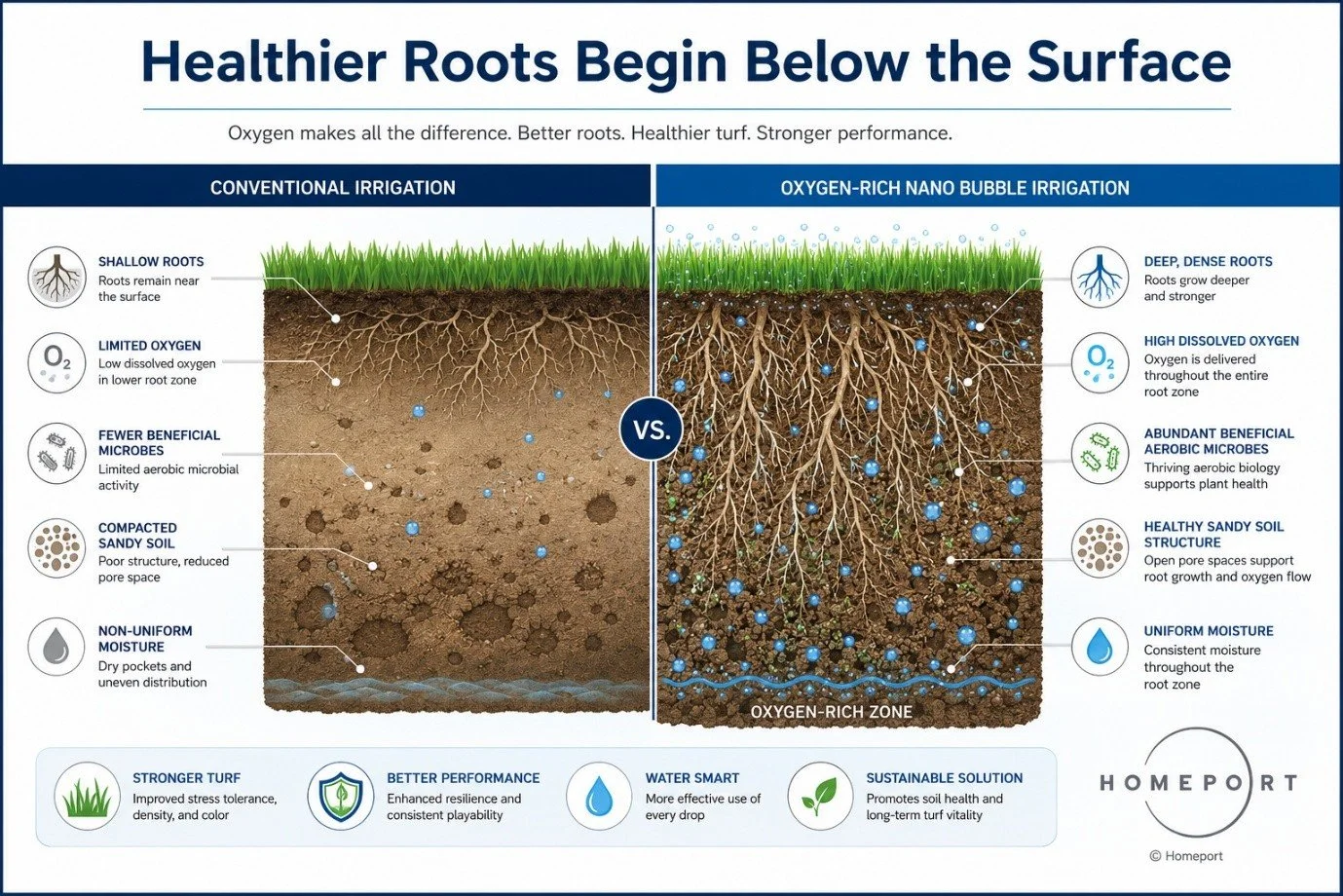
Cross-sectional illustration comparing a conventional irrigated root zone with one irrigated using Homeport OxyFusion® high-purity oxygen nanobubbles, highlighting root depth, oxygen availability, microbial activity and soil health.
How Nanobubbles Transform the Root Zone
Building Healthier Turf from the Soil Up
The quality of any turf surface is determined long before the first golfer tees off or the first football match begins.
It is determined every day beneath the surface, where roots, water, oxygen and billions of microorganisms work together to create a living ecosystem.
Traditional irrigation delivers moisture.
Nanobubble irrigation delivers moisture together with dissolved oxygen, creating a healthier environment throughout the root zone.
When combined with Homeport OxyFusion®, which incorporates integrated oxygen concentrators producing approximately 98% high-purity oxygen, the irrigation system becomes more than a water delivery network—it becomes an active root-zone management system.
Roots Need More Than Water
Grass roots perform three essential functions:
Absorb water.
Absorb nutrients.
Anchor the plant.
To perform these functions efficiently, roots require continuous respiration.
Just like fish, beneficial bacteria and humans, plant roots consume oxygen and release carbon dioxide.
When oxygen levels decline, root respiration slows.
The consequences become visible surprisingly quickly:
Reduced root extension
Shallower rooting depth
Lower nutrient uptake
Reduced drought tolerance
Slower recovery after wear
Increased susceptibility to disease
Healthy turf therefore begins with healthy roots, and healthy roots begin with oxygen.
Oxygen-Rich Irrigation Water
Conventional irrigation water typically contains dissolved oxygen close to atmospheric equilibrium.
By enriching irrigation water with nanobubbles generated from approximately 98% pure oxygen, Homeport OxyFusion® increases the amount of dissolved oxygen available to the root zone while improving gas transfer efficiency.
Rather than allowing large bubbles to rise immediately to the surface and escape, nanobubbles remain suspended in the irrigation water for extended periods, distributing oxygen more uniformly throughout the soil profile.
This helps create a root environment that better supports plant respiration and beneficial microbial activity.
Engineering Insight
Conventional irrigation asks, "How much water does the turf need?"
Homeport OxyFusion® also asks, "How much oxygen does the root zone need?"
Stronger Roots Mean Stronger Turf
A well-developed root system provides multiple advantages.
Deeper roots can access moisture stored further below the surface, improving resilience during hot weather and reducing dependence on frequent irrigation.
Healthier roots also improve nutrient uptake, allowing fertilisers to be used more efficiently.
The result is turf that is:
More resilient during summer heat
Better able to recover after heavy play
More tolerant of short irrigation interruptions
Better anchored against wear and traffic
The visible improvement above ground begins with biological improvement below ground.
Supporting Beneficial Soil Biology
Healthy soils contain enormous populations of microorganisms.
Many of these bacteria and fungi perform valuable functions including:
Breaking down organic matter
Recycling nutrients
Supporting root development
Improving soil structure
Suppressing certain soil-borne pathogens through natural competition
Most beneficial microorganisms perform best under well-aerated conditions.
When soils become oxygen deficient, anaerobic organisms begin to dominate.
This shift can contribute to:
Unpleasant odours
Organic matter accumulation
Black layer formation
Reduced nutrient cycling
Poor root health
By improving oxygen availability in the root zone, nanobubble irrigation helps maintain conditions that favour aerobic microbial communities.
Better Fertiliser Efficiency
Fertiliser represents one of the largest operating costs for golf courses and sports facilities.
However, nutrients are only valuable if plants can absorb them.
Healthy root systems are generally more effective at taking up nitrogen, phosphorus, potassium and trace elements than stressed or oxygen-deficient roots.
While nanobubbles do not replace fertiliser, they can support the conditions needed for plants to make better use of applied nutrients.
This can contribute to more efficient fertiliser programmes and reduce unnecessary nutrient losses.
Why This Matters in Sandy Soils
This is particularly important throughout the Gulf region.
Golf courses in the UAE, Saudi Arabia, Qatar and neighbouring countries frequently use engineered sand profiles because they provide rapid drainage and consistent playing conditions.
However, sandy soils also present several agronomic challenges.
Compared with loam soils they generally:
Retain less water
Retain fewer nutrients
Contain lower organic matter
Support lower microbial populations
Heat up more rapidly during summer
These characteristics increase the importance of efficient irrigation management.
Oxygen-rich nanobubble irrigation cannot change the texture of sand, but it can improve the biological environment within that sand by supporting healthier roots and more active microbial populations.
When combined with sound agronomic practices—including organic matter management, appropriate fertilisation and proper irrigation scheduling—it becomes another tool for maintaining premium playing surfaces under demanding climatic conditions.
Helping Turf Cope with Heat Stress
Summer temperatures exceeding 45°C are common across much of the Middle East.
Under these conditions:
Plant respiration increases.
Water demand rises.
Soil temperatures increase.
Root stress intensifies.
Maintaining healthy root respiration becomes increasingly important during these periods.
Because Homeport OxyFusion® continuously enriches irrigation water with high-purity oxygen nanobubbles, it helps provide favourable oxygen conditions within the root zone during periods when plants are under their greatest environmental stress.
Although no irrigation technology can eliminate heat stress entirely, improving root-zone conditions can support stronger turf performance during extreme weather.
Water Use Efficiency
Water conservation has become a major objective for golf courses, municipalities and sports facilities worldwide.
The goal is no longer simply to irrigate more.
The goal is to irrigate more effectively.
Healthier root systems are generally better able to explore larger soil volumes for available moisture.
This can contribute to improved drought resilience and support irrigation strategies that maximise the value of every litre applied.
For facilities operating under water restrictions or using reclaimed water, improving irrigation efficiency is becoming increasingly valuable.
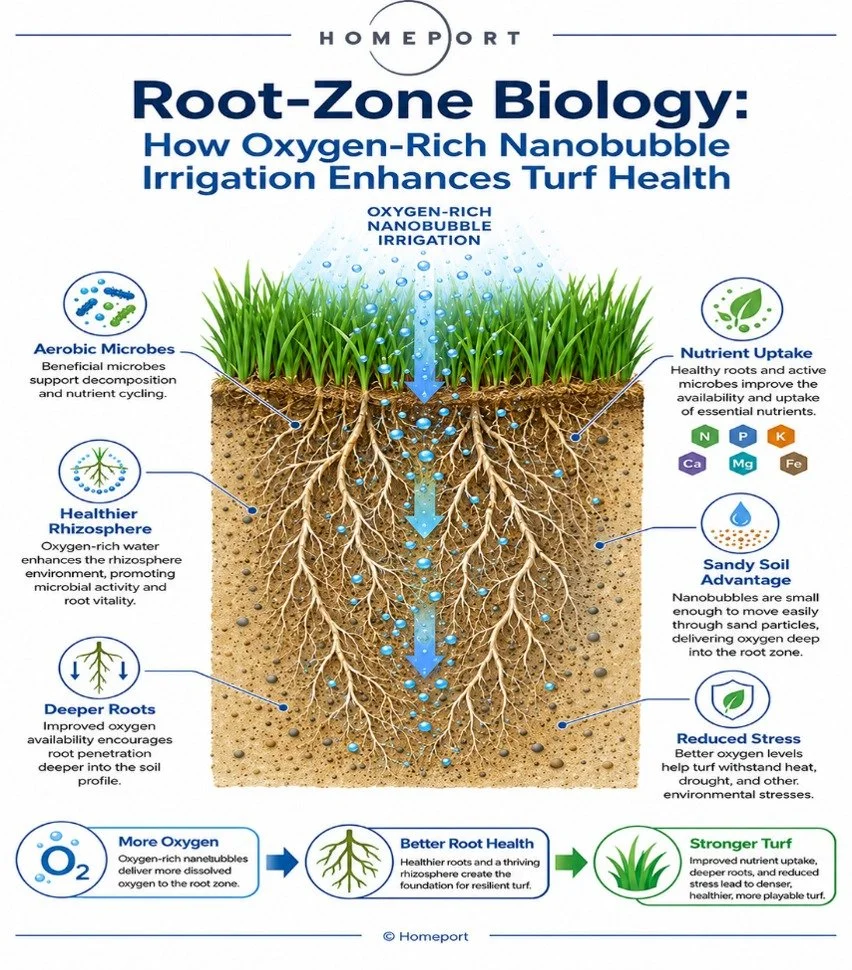
Root Zone Biology Enhanced by Oxygen Nanobubbles
Healthy roots create the foundation for every high-quality playing surface.
The next section focuses on one of the world's most demanding turf environments: Golf courses.
We'll examine how oxygen-rich nanobubble irrigation can help improve greens, tees and fairways while addressing common challenges such as black layer, salinity, irrigation efficiency, disease pressure and the exceptionally demanding climatic conditions found throughout the Middle East.
Golf Courses
Producing Championship Playing Surfaces Through Oxygen-Rich Irrigation
Few landscapes place greater demands on turf than a championship golf course.
Every day, superintendents balance competing priorities:
Exceptional playing quality
Water conservation
Disease management
Nutrient efficiency
Budget control
Sustainability targets
Increasing golfer expectations
The challenge becomes even greater in regions such as the Middle East, where golf courses operate under extreme temperatures, sandy root zones, saline irrigation water and high evaporative losses.
Maintaining world-class turf under these conditions requires more than good irrigation.
It requires high-quality irrigation water.
That is where oxygen-rich nanobubble technology begins to make a measurable difference.
A Golf Course Is Not One Surface
One of the most common misconceptions is that every part of a golf course requires identical management.
In reality, every playing area presents different agronomic challenges.
Each therefore responds differently to improvements in irrigation water quality.
Greens
Greens represent the most intensively managed turf on any golf course.
They are:
Closely mown
Frequently irrigated
Highly trafficked
Continuously fertilised
Subjected to regular topdressing
Mechanically compacted through maintenance and play
Because greens are maintained to extremely high standards, even small improvements in root health can have noticeable effects on turf performance.
Oxygen-rich nanobubble irrigation helps create a healthier root environment by supporting root respiration and aerobic microbial activity throughout the upper root zone.
Potential benefits include:
Stronger root systems
Improved turf density
Faster recovery following aeration
Better tolerance of summer stress
More uniform playing surfaces
Tees
Tees experience concentrated wear due to repeated foot traffic and divot formation.
Healthy roots are essential for rapid recovery.
A well-oxygenated root zone helps support:
Faster establishment of new growth
Improved nutrient uptake
Better anchorage
Greater resilience under continuous use
This is particularly valuable during tournament periods when maintenance windows become limited.
Fairways
Fairways cover the largest irrigated area on most golf courses.
Consequently, even modest improvements in irrigation efficiency can translate into substantial operational savings.
Healthy root systems enable turf to explore a greater soil volume for available moisture.
This supports irrigation strategies focused on efficiency rather than simply increasing water application.
For large golf facilities, improved irrigation efficiency can contribute to:
Reduced pumping costs
Lower water consumption
Improved fertiliser utilisation
Greater drought resilience
More consistent turf quality
Roughs and Landscape Areas
Although roughs are generally maintained less intensively than greens or fairways, they often represent the largest proportion of irrigated landscape.
Many golf facilities are now reducing irrigation inputs in these areas as part of broader sustainability initiatives.
Improving root health allows turf to remain more resilient under deficit irrigation programmes while maintaining acceptable visual quality.
Engineering Insight
The objective is not simply to irrigate more.
The objective is to maximise the value of every litre of irrigation water.
Black Layer: One of Golf's Most Persistent Problems
Every experienced golf course superintendent is familiar with black layer.
This anaerobic condition develops when oxygen availability within the root zone becomes severely limited.
Under oxygen-deficient conditions, sulphate-reducing bacteria begin producing hydrogen sulphide, creating the characteristic black discolouration and unpleasant odour associated with black layer.
The consequences may include:
Reduced root growth
Declining turf quality
Poor drainage
Soft playing surfaces
Increased disease susceptibility
Slower recovery following maintenance
Traditional management typically relies on:
Hollow-tine aeration
Sand topdressing
Organic matter control
Improved drainage
These remain essential practices.
Nanobubble irrigation does not replace them.
Instead, it complements them by helping maintain a more oxygen-rich root environment between mechanical aeration programmes.
Salinity: The Reality of Golf in the Middle East
Across much of the GCC, irrigation water is rarely ideal.
Many golf courses depend on:
Treated sewage effluent (TSE)
Reclaimed municipal water
Brackish groundwater
Blended irrigation supplies
These water sources often contain elevated dissolved salts.
Excess salinity creates multiple stresses for turf:
Reduced water uptake
Root stress
Nutrient imbalance
Slower growth
Increased susceptibility to heat stress
While nanobubbles do not remove dissolved salts, oxygen-rich irrigation water can help support healthier root systems and more active soil biology, improving the plant's ability to cope with challenging growing conditions as part of an integrated salinity management programme.
This distinction is important.
Nanobubbles are not a desalination technology.
They are a technology that helps plants perform more effectively under demanding environmental conditions.
Better Soil Biology Means Better Turf
A healthy golf course depends on far more than grass alone.
The root zone contains billions of microorganisms responsible for:
Organic matter decomposition
Nutrient mineralisation
Nitrogen cycling
Soil aggregation
Root protection
Natural biological competition against certain pathogens
These organisms perform best in well-aerated soils.
Improving oxygen availability supports the biological processes that help maintain healthy, resilient turf over the long term.
Disease Pressure
Golf course diseases rarely result from a single cause.
Instead, they usually develop when several stress factors combine.
These may include:
High humidity
Heat stress
Poor drainage
Excess organic matter
Compacted soils
Oxygen-deficient root zones
Improving root-zone oxygen does not eliminate disease.
However, healthier turf is generally more capable of resisting environmental stress and recovering after disease outbreaks.
This allows nanobubble irrigation to become part of an integrated turf management programme alongside sound agronomy, drainage, nutrition and appropriate plant protection practices.
Improving Fertiliser Performance
Fertiliser represents one of the largest annual operating costs for many golf facilities.
The objective is therefore not simply to apply nutrients.
It is to ensure the turf can utilise them effectively.
Healthy, actively respiring roots are generally more efficient at absorbing:
Nitrogen
Phosphorus
Potassium
Calcium
Magnesium
Micronutrients
By supporting healthier root development, oxygen-rich irrigation contributes to the conditions needed for improved nutrient use efficiency.
Why Homeport OxyFusion® Is Different
Many irrigation oxygenation systems rely solely on ambient air.
Homeport has taken a different engineering approach.
Every Homeport OxyFusion® system incorporates an integrated oxygen concentrator producing approximately 98% high-purity oxygen on-site.
Rather than introducing irrigation water containing only the oxygen naturally available in atmospheric air, OxyFusion® delivers high-purity oxygen nanobubbles engineered to maximise dissolved oxygen transfer and maintain oxygen-rich irrigation water throughout the distribution system.
For demanding golf course applications—particularly in hot climates where oxygen demand and environmental stress are highest—this additional oxygen transfer capacity provides a significant engineering advantage.
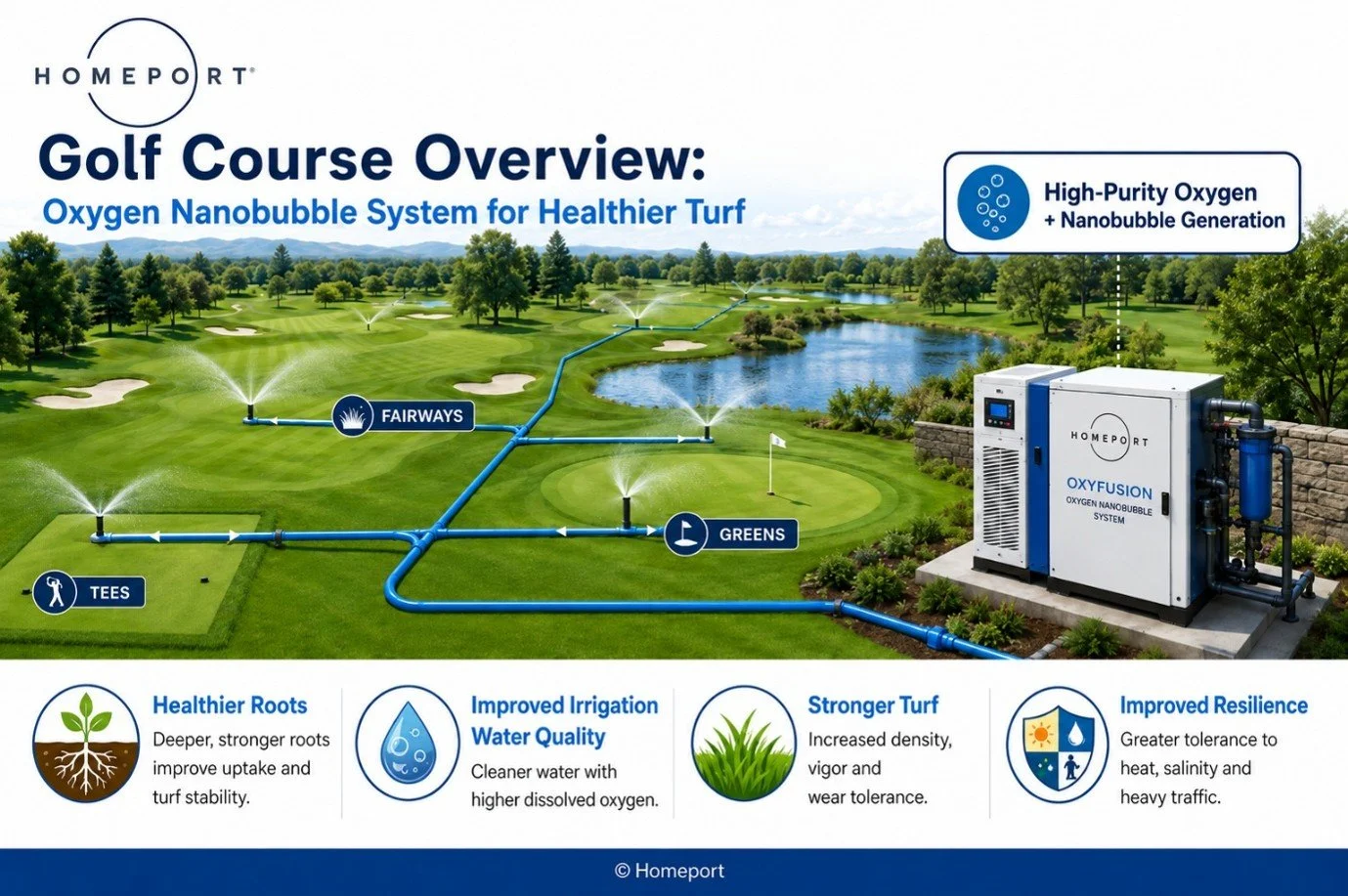
Nanobubble Oxygenation: Homeport Oxyfusion
Golf courses are among the most demanding turf environments in the world.
Sports fields present a different challenge.
Instead of maintaining perfect playing conditions every day, they must recover rapidly after intense physical use.
The next section explores how oxygen-rich nanobubble irrigation can help football pitches, rugby fields, cricket grounds, polo fields and other sports facilities develop stronger root systems, recover more quickly after play and maintain safer, more consistent playing surfaces throughout the season.
Stronger Roots, Faster Recovery and Safer Playing Surfaces
While golf courses strive for visual perfection every day, sports fields face a different challenge.
Their greatest test begins after the game.
Every football match, rugby fixture, cricket tournament or polo event subjects the turf to enormous physical stress.
Players accelerate, brake, pivot and slide, placing repeated mechanical loads on the turf surface and, more importantly, on the root system below.
The quality of the playing surface therefore depends not only on how the turf looks before the match, but on how quickly it recovers afterwards.
That recovery starts below ground.
Every Match Damages Turf
No matter how carefully a pitch is maintained, every event causes some degree of damage.
Common stresses include:
Soil compaction
Root shearing
Turf wear
Surface deformation
Organic matter accumulation
Reduced infiltration
Localised waterlogging
Increased disease risk
Grounds managers cannot prevent these stresses.
Their job is to help the turf recover as quickly as possible.
Healthy roots are the foundation of that recovery.
Why Root Health Determines Recovery Speed
After heavy use, the grass plant immediately begins repairing damaged tissues.
This requires:
Oxygen
Water
Nutrients
Energy
If roots are healthy and actively respiring, recovery begins almost immediately.
If roots are stressed by poor oxygen availability, recovery slows significantly.
The result may include:
Thin turf cover
Weak rooting
Uneven playing surfaces
Increased disease pressure
Higher maintenance requirements
Nanobubble irrigation supports the root environment by delivering oxygen-rich irrigation water directly into the soil profile where recovery begins.
Engineering Insight
Players perform above the ground.
Recovery happens below it.
Football Pitches
Modern football pitches must withstand:
Daily training sessions
Professional matches
Community use
Maintenance equipment
Broadcast expectations
In many stadiums, recovery time between events has become increasingly limited.
Healthy root systems allow turf to regenerate more rapidly between matches.
By improving root-zone oxygen availability, Homeport OxyFusion® supports the biological conditions needed for stronger root development and more resilient turf.
Potential benefits include:
Faster post-match recovery
Improved turf density
Better anchorage
Reduced divoting
More consistent playing quality
Rugby Fields
Rugby produces some of the highest mechanical loads experienced by natural turf.
Repeated scrums and heavy player contact create severe compaction and surface disruption.
Strong roots help maintain:
Surface stability
Player footing
Turf cover
Drainage performance
Supporting root health therefore becomes a key part of maintaining safe playing conditions throughout the season.
Cricket Grounds
Cricket presents a unique challenge because different areas of the ground require different performance characteristics.
The outfield benefits from:
Dense, healthy turf
Uniform moisture
Smooth ball roll
Surrounding landscape areas require efficient irrigation and long-term resilience.
Nanobubble irrigation can support healthier root systems across the wider turf areas while fitting into existing irrigation infrastructure.
Polo Fields
Polo fields combine the demands of sport with the pressures of maintaining premium natural grass over very large areas.
Repeated horse traffic places substantial stress on:
Root systems
Soil structure
Irrigation performance
Maintaining vigorous turf across such large irrigated landscapes requires efficient water management.
Because irrigation represents one of the largest operating costs for polo clubs, improving the effectiveness of every irrigation cycle can provide meaningful long-term value.
Tennis Clubs and Multi-Sport Facilities
Natural grass tennis courts and multi-use sports facilities often experience continuous seasonal use with limited recovery periods.
Healthy roots contribute to:
Better turf density
More uniform surfaces
Improved resistance to wear
Faster recovery after tournaments
Reduced maintenance disruption
For facilities hosting multiple sporting events, maintaining consistent playing quality throughout the year becomes increasingly important.
Municipal Parks and Public Sports Grounds
Not every sports facility has the budget of a championship stadium.
Municipal parks often face the opposite challenge:
Limited maintenance budgets
Heavy public use
Water restrictions
Small maintenance teams
Here, efficiency becomes just as important as performance.
Healthier turf generally requires fewer remedial interventions than chronically stressed turf.
Improving root-zone conditions can therefore contribute to lower long-term maintenance requirements while supporting better public amenities.
Drainage and Surface Performance
One of the greatest enemies of any sports surface is poor drainage.
Compacted soils reduce:
Water infiltration
Oxygen movement
Root respiration
Although nanobubbles do not replace proper drainage design, they complement good drainage practices by helping maintain a more oxygen-rich soil environment after irrigation.
The combination of:
sound drainage,
effective aeration programmes,
and oxygen-rich irrigation
creates healthier conditions for root development than any one practice alone.
Reducing Plant Stress During Summer
High temperatures create enormous pressure on sports turf.
Across the Gulf region, summer conditions often include:
Air temperatures above 45°C
Soil temperatures exceeding optimum root growth conditions
High evaporation rates
Elevated salinity
Intense solar radiation
These conditions increase root respiration while simultaneously making oxygen less available within warm irrigation water.
Homeport OxyFusion® addresses part of this challenge by enriching irrigation water with approximately 98% high-purity oxygen nanobubbles, helping maximise dissolved oxygen delivered into the root zone.
Although no technology can eliminate environmental stress entirely, improving oxygen availability supports healthier root function during periods of peak demand.
Sustainability Is Becoming a Competitive Advantage
Professional sports organisations increasingly publish sustainability reports covering:
Water consumption
Carbon emissions
Energy efficiency
Environmental stewardship
Grounds management now contributes directly to these objectives.
Improving irrigation efficiency, supporting healthier turf and maximising fertiliser utilisation all contribute to more sustainable facility management.
Nanobubble technology aligns naturally with these goals because it focuses on improving the efficiency of existing resources rather than simply increasing resource consumption.
Why High-Purity Oxygen Matters
Many turf oxygenation systems rely solely on atmospheric air.
Homeport adopted a different engineering philosophy.
Every Homeport OxyFusion® system incorporates an integrated oxygen concentrator that produces approximately 98% high-purity oxygen on-site.
This approach provides several advantages for demanding sports turf applications:
Greater dissolved oxygen potential than ambient-air systems
More efficient oxygen transfer into irrigation water
No routine dependence on delivered oxygen cylinders
Consistent oxygen quality throughout operation
A fully integrated system designed specifically for long-term irrigation performance
By combining high-purity oxygen with nanobubble technology, OxyFusion® delivers oxygen-rich irrigation water engineered to support healthier root zones in some of the world's most demanding growing environments.
Industry Insight
The future of sports turf management is not simply applying more water, fertiliser or chemicals.
It is making every litre of irrigation water work harder by improving its quality before it reaches the soil.
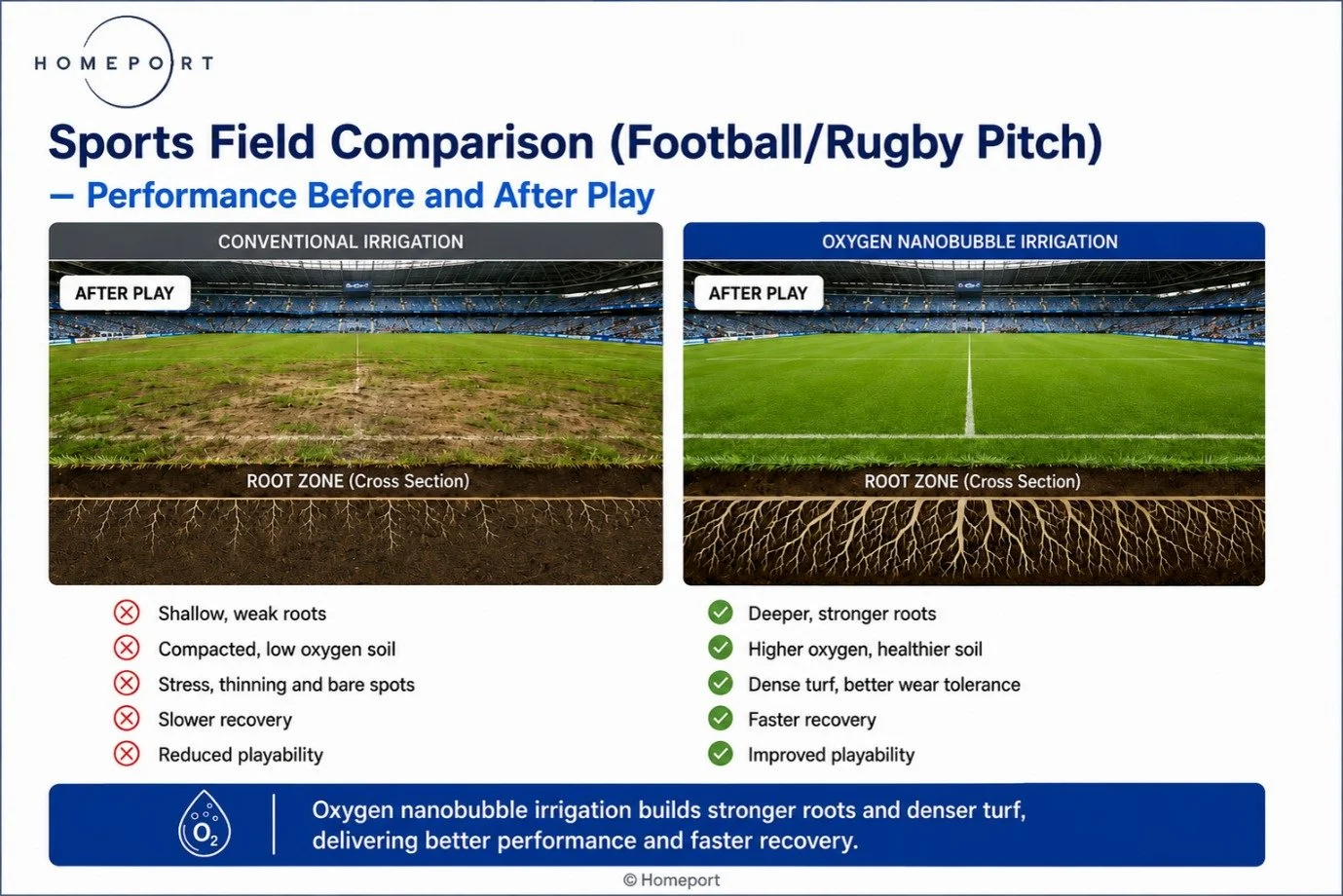
Football Field: Conventional vs Nanobubble Irrigation
Healthy turf depends on more than the grass itself.
The irrigation system that delivers the water is equally important.
Next we'll explore how oxygen-rich nanobubbles improve irrigation water quality, reduce biofilm inside pipelines, minimise sprinkler and emitter clogging, support the use of reclaimed water, and help golf courses and sports facilities build more reliable, sustainable irrigation systems.
Why Better Water Produces Better Turf
Most irrigation systems are designed with one primary objective:
Deliver the correct amount of water.
Modern pumps are more efficient.
Controllers are more sophisticated.
Weather stations automatically adjust irrigation schedules.
Variable-frequency drives reduce energy consumption.
Yet one fundamental question is often overlooked:
What is the quality of the water being delivered?
For golf courses and sports facilities, irrigation water is far more than a transport medium.
It influences:
Root respiration
Soil microbiology
Nutrient availability
Irrigation system cleanliness
Turf health
Long-term maintenance costs
Improving irrigation water quality therefore improves the performance of the entire irrigation system—not just the grass.
The Hidden Problems Inside Irrigation Systems
Most irrigation pipework is never seen after installation.
However, over time, irrigation systems often develop problems that gradually reduce performance.
Common issues include:
Biofilm formation
Bacterial growth
Algae development
Mineral scaling
Iron deposits
Reduced pipe diameter
Partially blocked sprinklers
Uneven water distribution
These changes occur slowly.
Because they develop over many years, they are frequently accepted as normal ageing rather than recognised as performance losses.
Biofilm – The Invisible Enemy
One of the most persistent irrigation problems is biofilm.
Biofilm consists of communities of microorganisms protected by a self-produced polymer matrix that adheres to internal pipe surfaces.
Once established, biofilm can:
Restrict water flow
Harbour undesirable microorganisms
Trap suspended solids
Encourage mineral deposition
Increase maintenance requirements
Reduce irrigation uniformity
Traditional maintenance often relies upon:
Chlorination
Acid flushing
Mechanical cleaning
Periodic pipe replacement
These methods remain valuable but are labour intensive and often reactive rather than preventative.
How Oxygen-Rich Nanobubbles Help
Homeport OxyFusion® introduces irrigation water enriched with approximately 98% high-purity oxygen nanobubbles throughout the irrigation network.
This creates several beneficial effects.
First, improved dissolved oxygen supports aerobic microbial communities that naturally compete with anaerobic organisms responsible for many undesirable biological processes.
Second, oxygen-rich water helps discourage the development of oxygen-deficient conditions that favour slime-producing bacteria.
Third, where appropriate gases such as ozone are used in specialist applications, nanobubble technology can also contribute to advanced oxidation and biofilm reduction.
The result is an irrigation system that remains cleaner and performs more consistently over time.
Engineering Insight
A clean irrigation system does not simply reduce maintenance.
It delivers water more uniformly, protects pumping equipment and helps ensure every sprinkler performs as originally designed.
Sprinkler Performance Begins Inside the Pipe
Uniform irrigation depends on every sprinkler receiving the correct pressure and flow.
Biofilm, mineral deposits and partial blockages gradually reduce that consistency.
The consequences may include:
Dry patches
Overwatered areas
Uneven turf colour
Localised stress
Higher water consumption
Increased maintenance
Improving water quality throughout the distribution network helps maintain more consistent hydraulic performance over the life of the system.
Working with Reclaimed Water
Across the Middle East, reclaimed water has become an essential irrigation resource.
Many golf courses and sports facilities rely on:
Treated sewage effluent (TSE)
Recycled municipal water
Blended reclaimed supplies
These sources provide valuable water resources but frequently contain:
Elevated nutrients
Suspended solids
Higher biological activity
Greater dissolved salts
Variable water quality
Managing reclaimed water successfully requires an integrated approach that considers both irrigation quantity and irrigation quality.
Nanobubble technology does not replace filtration or proper water treatment.
Instead, it complements these systems by improving dissolved oxygen and supporting healthier biological conditions throughout the irrigation network and root zone.
Supporting Sustainable Water Management
Water has become one of the most valuable resources available to turf managers.
Across many regions, particularly the GCC, facilities are expected to:
Reduce water consumption
Improve irrigation efficiency
Increase reclaimed water use
Reduce nutrient losses
Lower environmental impact
Every litre of irrigation water therefore needs to deliver maximum value.
Oxygen-rich nanobubble irrigation supports this objective by improving the biological quality of irrigation water while enhancing root-zone conditions.
The result is a more efficient use of the water already being applied.
Salinity Management—Supporting Turf Under Difficult Conditions
Salinity remains one of the greatest long-term challenges facing Middle Eastern golf courses.
High concentrations of dissolved salts reduce the ability of roots to absorb water, even when soil moisture appears adequate.
The turf effectively experiences physiological drought despite irrigation.
Nanobubbles do not remove dissolved salts.
However, healthier, more active root systems are generally better equipped to tolerate saline conditions than stressed root systems.
Combined with:
proper leaching programmes,
gypsum applications where appropriate,
balanced nutrition,
and sound irrigation management,
oxygen-rich nanobubble irrigation becomes another component of a comprehensive salinity management strategy.
This distinction is important.
Homeport does not claim that nanobubbles eliminate salinity.
We demonstrate how improved root-zone oxygenation helps turf perform more effectively despite saline growing conditions.
Water Conservation Through Better Plant Performance
One of the most common misconceptions is that nanobubbles reduce water consumption by changing the physical properties of water.
The reality is more practical.
Healthier plants generally use water more efficiently.
Deeper roots access moisture stored lower in the soil profile.
Improved root function supports better drought resilience.
Greater root mass increases the effective soil volume available to the plant.
Together, these improvements may allow irrigation managers greater flexibility in scheduling irrigation without compromising turf quality.
Water savings therefore arise from improved plant performance, not from changing the chemical composition of water itself.
Comparing Irrigation Approaches
| Feature | Conventional Irrigation | Aerated Water | Homeport OxyFusion® |
|---|---|---|---|
| Oxygen source | Natural dissolved oxygen | Ambient air | Integrated ~98% oxygen concentrator |
| Oxygen transfer | Limited | Moderate | High-efficiency nanobubbles |
| Irrigation system cleanliness | Standard maintenance | Moderate improvement | Enhanced biological support and cleaner system operation |
| Root-zone oxygenation | Limited | Improved | Significantly enhanced |
| Suitable for reclaimed water | Yes | Yes | Particularly beneficial where high water quality is desired |
| Designed for demanding turf | Moderate | Good | Excellent |
The purpose of this comparison is not to suggest that conventional irrigation is ineffective.
Rather, it demonstrates how improving irrigation water quality can enhance the performance of an already well-designed irrigation system.
The Economics of Better Water
Every golf course superintendent understands the cost of poor irrigation.
It appears as:
Increased labour
More maintenance
Higher fertiliser consumption
Greater disease pressure
Additional overseeding
Reduced playing quality
More customer complaints
Conversely, investments that improve irrigation efficiency often generate benefits across multiple areas of course management.
Instead of solving a single problem, they strengthen the entire turf management programme.
This systems-based approach is one reason why oxygen-rich nanobubble irrigation is attracting increasing attention from golf courses, stadiums and landscape managers seeking long-term operational improvements rather than short-term fixes.
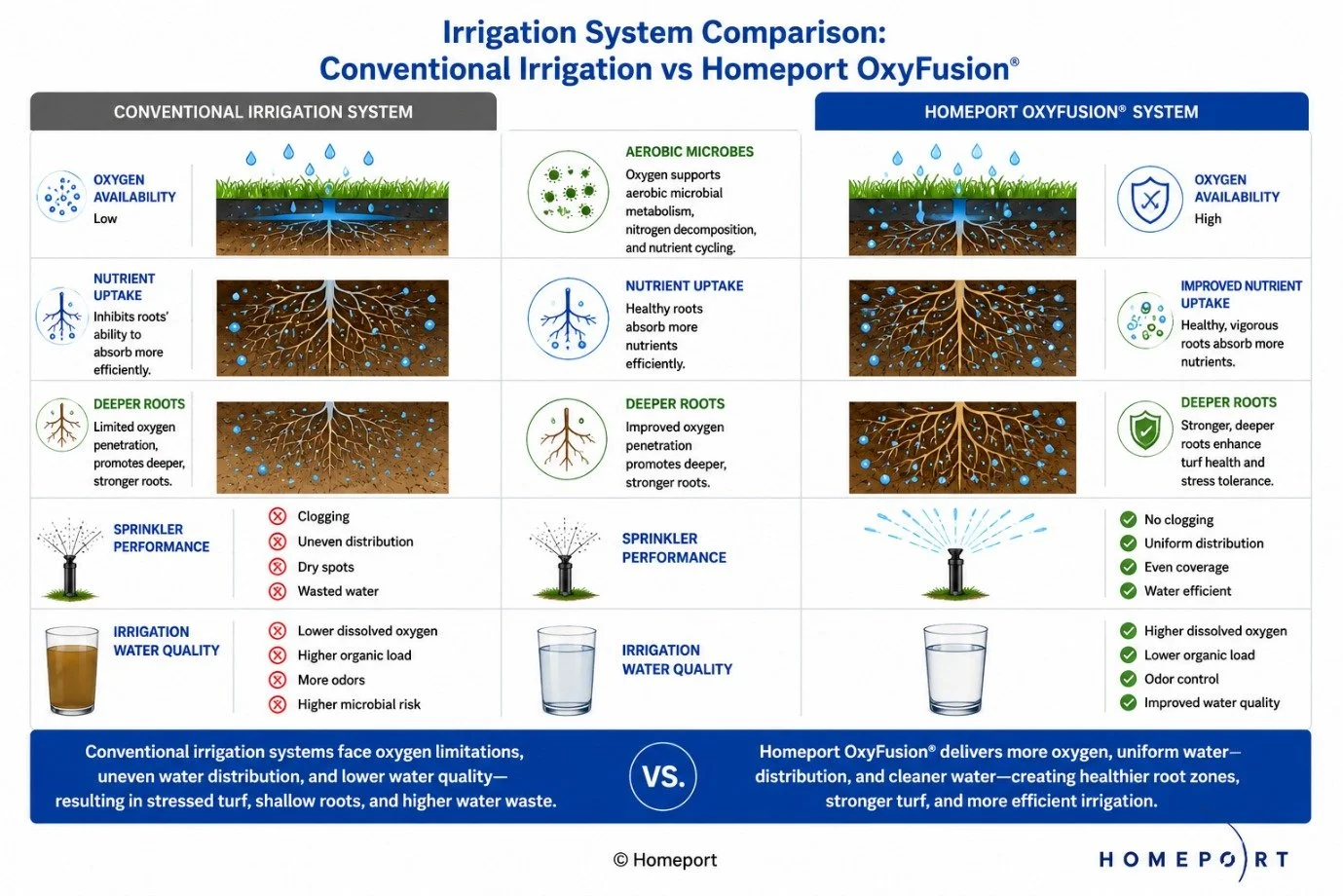
Conventional Irrigation System vs Homeport Oxyfusion System
Comparison of a conventional irrigation system and a Homeport OxyFusion® oxygen-rich nanobubble irrigation system, illustrating improved water quality, cleaner pipelines, healthier root zones and more uniform irrigation performance.
Understanding the science is only the first step.
The final section brings everything together by examining lifecycle economics, return on investment, sustainability, and how Homeport OxyFusion® and Homeport AI™ combine engineering expertise, integrated 98% oxygen concentration, and intelligent system optimisation to deliver measurable long-term value for golf courses, sports facilities and landscape projects.
The Business Case for Oxygen-Rich Turf
Why the Smartest Investment Is Often the One Below Ground
Every investment made in turf management ultimately seeks the same outcome:
Better playing quality
Lower operating costs
Greater sustainability
Longer asset life
Happier players and visitors
The challenge is that many maintenance practices treat the symptoms rather than the underlying cause.
A weak root system requires more fertiliser.
Poor soil biology increases disease pressure.
Compacted soils demand more aeration.
Uneven irrigation requires additional water.
Over time, these costs accumulate.
Improving the health of the root zone changes the equation.
Instead of continually correcting problems above ground, managers begin improving the biological processes below ground that support healthy turf naturally.
Looking Beyond the Purchase Price
When evaluating new irrigation technology, it is tempting to compare only the purchase cost.
However, for golf courses and sports facilities, the purchase price of equipment often represents only a small proportion of its total lifetime cost.
The real financial impact is determined by:
Water consumption
Electricity usage
Fertiliser inputs
Chemical applications
Labour
Maintenance
Turf replacement
Downtime
Customer satisfaction
Professional asset managers increasingly evaluate projects using Total Cost of Ownership (TCO) rather than initial capital cost alone.
This approach provides a much more realistic assessment of long-term value.
Where Value Is Created
Unlike many irrigation upgrades, oxygen-rich nanobubble technology does not rely on a single source of savings.
Instead, it has the potential to improve multiple aspects of turf management simultaneously.
Potential areas of value include:
Improved root development
Better nutrient utilisation
Reduced plant stress
Greater resilience during heatwaves
Improved irrigation efficiency
Cleaner irrigation infrastructure
Reduced biofilm accumulation
Lower maintenance requirements
Improved consistency of playing surfaces
Individually, some of these improvements may appear modest.
Together, they can significantly influence the long-term economics of maintaining premium turf.
Engineering Insight
The greatest return on investment rarely comes from doing one thing dramatically better.
It comes from improving many interconnected processes at the same time.
Sustainability Is Becoming a Performance Requirement
Environmental performance is no longer simply a public relations objective.
Many golf courses, municipalities and sports organisations now operate under measurable sustainability targets covering:
Water conservation
Carbon reduction
Energy efficiency
Responsible use of reclaimed water
Reduced chemical dependency
Biodiversity enhancement
Modern turf management therefore requires technologies that improve both environmental performance and operational efficiency.
Oxygen-rich nanobubble irrigation aligns well with these objectives because it focuses on improving the effectiveness of existing irrigation practices rather than increasing resource consumption.
Why Homeport OxyFusion® Is Different
Many companies manufacture nanobubble generators.
Homeport engineered an integrated irrigation solution.
Every Homeport OxyFusion® system incorporates an on-board oxygen concentrator capable of producing approximately 98% high-purity oxygen.
This means the system is not dependent on ambient air, which contains only about 21% oxygen.
Nor does it normally require the ongoing logistics of oxygen cylinder deliveries for most turf applications.
Instead, oxygen is produced continuously on-site and converted into stable nanobubbles before entering the irrigation network.
This engineering philosophy provides several important advantages:
Higher dissolved oxygen potential
More efficient oxygen transfer
Consistent oxygen quality
Simplified operation
Fully integrated system design
Lower dependence on external gas supply
For demanding applications such as championship golf courses, elite sports facilities and premium landscape developments, Homeport believes this approach provides the optimum balance of performance, operating economy and long-term reliability.
Homeport AI™
Engineering Smarter Irrigation Systems
Installing a nanobubble generator is only one part of achieving successful outcomes.
System performance also depends on:
Water source
Soil type
Root-zone construction
Turf species
Irrigation scheduling
Salinity
Climate
Oxygen demand
Hydraulic design
This is where Homeport AI™ becomes an important engineering tool.
Rather than relying solely on standard design charts, Homeport AI™ assists our engineering team by analysing thousands of project variables to optimise every installation.
The platform supports:
Irrigation system design
Oxygen demand modelling
Hydraulic calculations
Pump selection
Oxygen concentrator sizing
Generator selection
Pipework optimisation
Irrigation zoning
Energy consumption modelling
Lifecycle cost analysis
Return-on-investment forecasting
This allows every Homeport OxyFusion® installation to be tailored to the unique requirements of the site rather than applying a generic "one-size-fits-all" design.
Why This Matters in the Middle East
The Gulf region presents some of the most demanding turf conditions anywhere in the world.
Facilities routinely manage:
Extreme summer temperatures
Engineered sand profiles
High evapotranspiration
Saline irrigation water
Treated sewage effluent (TSE)
High expectations for year-round playing quality
Maintaining premium turf under these conditions requires an integrated engineering approach.
Homeport OxyFusion® has been developed with these challenges in mind.
By combining high-purity oxygen nanobubbles, intelligent engineering and AI-assisted optimisation, the system is designed to support healthier root zones while helping facilities use water, nutrients and energy more efficiently.
Technology Selection Guide
Not every project requires the same level of oxygenation.
The following framework provides general guidance.
| Turf Application | Recommended Solution |
|---|---|
| Municipal parks with modest irrigation demands | Conventional irrigation may be sufficient |
| Landscaped developments seeking improved root health | Homeport OxyFusion® |
| Golf courses using reclaimed or saline water | Homeport OxyFusion® |
| Championship golf courses | Homeport OxyFusion® |
| Professional football, rugby and cricket facilities | Homeport OxyFusion® |
| Polo clubs and equestrian facilities | Homeport OxyFusion® |
| Premium landscape developments | Homeport OxyFusion® |
The correct solution should always be based on agronomic objectives, water quality, budget and long-term operational requirements.
Key Takeaways
Throughout this chapter we have explored one central principle:
Exceptional turf begins below the surface.
Healthy roots require oxygen.
Healthy soils depend on active microbial communities.
Healthy irrigation systems require high-quality water.
Nanobubble technology supports these processes by improving the quality of irrigation water before it reaches the root zone.
The principal conclusions are:
Stronger roots support healthier, more resilient turf.
Oxygen-rich irrigation promotes favourable root-zone conditions.
Sandy soils, common throughout the Middle East, particularly benefit from careful irrigation and oxygen management as part of an integrated agronomic programme.
Nanobubbles complement—not replace—good drainage, fertilisation, aeration and soil management.
Improving irrigation water quality can enhance the efficiency of the entire turf management programme.
Integrated high-purity oxygen systems provide greater oxygen transfer potential than ambient-air systems for demanding applications.
Ready to Improve Your Turf from the Ground Up?
Whether you manage a championship golf course, an international football stadium, a polo club, a municipal park or a premium landscape development, the first question should not be:
"How much more water should I apply?"
It should be:
"Is my irrigation water helping my turf perform at its full potential?"
Homeport's engineering team can evaluate your existing irrigation system, analyse water quality, soil conditions and oxygen demand, and determine whether a Homeport OxyFusion® system can improve root-zone health, irrigation efficiency and long-term turf performance.
Using Homeport AI™, we develop site-specific recommendations based on engineering analysis rather than assumptions—helping clients achieve healthier turf, lower operating costs and more sustainable irrigation practices.
Summary
The quality of every playing surface is determined by the health of the ecosystem beneath it.
By combining nanobubble technology, integrated 98% oxygen concentration, advanced engineering and AI-assisted optimisation, Homeport OxyFusion® transforms irrigation from a simple water delivery system into a complete root-zone management solution.
The result is not simply greener grass.
It is healthier roots, stronger turf, more resilient landscapes and irrigation systems engineered for the future.